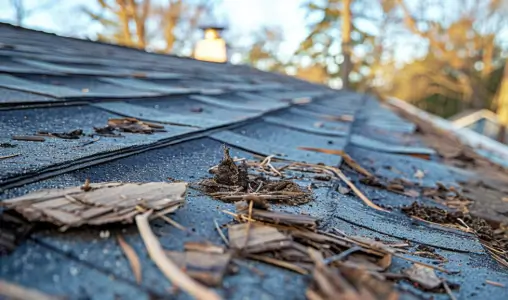
When homeowners start looking into roof repair brigham city, the issue is often not a dramatic blow off or a sudden hole in the roof. It is something slower. Leaves collect in a valley. Pine needles settle behind a chimney. Small twigs gather along the lower edge. After a while, that debris starts to hold moisture against the roof instead of letting the surface dry as it should.
Debris buildup is easy to overlook because it does not always seem urgent. But a roof is meant to quickly move water off the surface. When wet leaves, needles, and small branches sit in one place, they keep that part of the roof damp for longer than it should be. Over time, that extra moisture can wear down shingles, expose flashing to repeated dampness, and make it harder for the roof to dry between storms.
Debris Holds Water
Leaves on the roof may not look like a major problem at first. The issue starts when they get soaked and begin to collect into a dense layer. Instead of blowing away or drying out quickly, they hold moisture against the surface. That keeps water in direct contact with the roofing material longer than normal.
Repeated exposure can lead to gradual wear. Shingles are made to shed water, not stay covered by wet debris. When moisture lingers in the same area, granules can start coming loose, shingle edges may stay damp longer, and weak points around seams or joints become more vulnerable.
This gets worse when debris repeatedly accumulates in the same area. A roof section that never fully dries is more likely to show early wear than a section that clears quickly after a storm.
Valleys Take the Hit
Roof valleys are one of the first places where debris becomes a real moisture problem. Water naturally funnels into these channels, so they already deal with more runoff than the surrounding surface. Add a layer of leaves or needles there, and now water has to move through a blockage before it can drain away.
That slows everything down. Instead of flowing cleanly, water lingers. It may spread sideways under the debris, sit against the lower edges of shingles, or back up around flashing details. Even a small pile can change the drainage pattern enough to create a problem.
This is one reason some leaks are traced back to a valley even when the shingles around it look mostly intact. The issue is not always a sudden surface failure. Sometimes it is prolonged exposure to moisture in a part of the roof that already handles heavy runoff.
Blocked Drainage Changes Everything
Debris along gutters and roof edges can quickly lead to moisture problems. When water is blocked from draining off the roof, it starts to gather near the lower edge instead of flowing away. That keeps those sections wet longer and gives water more opportunity to slip beneath the shingles.
In many cases, the problem builds over time rather than all at once. A light scattering of debris may not cause much trouble. A heavy, soaked buildup near the edge is more serious. It can slow runoff during rain and leave the area damp well after the storm passes. As that cycle repeats, the roof edge becomes more vulnerable to wear and water damage.
Homeowners may notice the signs there first. The eaves may show staining. Wood near the edge may start to feel soft. Gutters may overflow during rain, even when the storm is not unusually heavy.
Moisture Does Not Stay at the Surface
One common mistake is thinking the problem stops at the shingles. When moisture sits on the roof for too long, it can seep into the layers below. That can affect the underlayment, the roof deck, and nearby wood.
This kind of damage is easy to miss early on. From the ground, the roof may still look fine. There may be no obvious leak inside. But underneath, the area can stay damp much longer than it should. Over time, the wood can weaken, fasteners can loosen, and what started as a cleanup issue can turn into a repair.
This is why some calls for roof repair brigham city end up focusing on a small section rather than the whole roof. The visible trouble may be limited, but the area beneath a long-standing debris pile may still require real repair work.
See also: Kylie Mattress Protector for Aged Care and Home Use
Small Signs Matter
Moisture problems from debris buildup rarely begin with a dramatic warning. More often, the early signs are easy to dismiss. You might see dark streaking in one section, a patch that stays damp long after the rest of the roof dries, or a recurring pile of leaves in the same low spot. Granules in the gutter can also point to an area that has been holding moisture longer than it should.
Inside the house, the clues may be even less direct. A faint ceiling mark, damp attic insulation, or a musty smell after rain can all indicate moisture quietly moving through the roof system.
These signs matter because they often show up before the damage becomes widespread. Catching the issue at this stage gives a homeowner more options.
Cleanup Prevents Bigger Repairs
The most effective response is not complicated, but it does require consistency. Roof surfaces need to be kept clear, especially in valleys, around penetrations, and near drainage paths. Overhanging branches should be addressed when they are contributing to repeated buildup. Gutters should stay clear enough to let runoff leave the roof without backing up.
Just as important, debris should not be ignored simply because the roof is not leaking yet. By the time water shows up indoors, the roof has usually been dealing with trapped moisture for longer than anyone realized.
A roof does not need a major storm to develop a moisture problem. Sometimes it just needs wet debris left in place too long. That is why regular cleanup and early attention matter. They help the roof dry properly, protect the materials beneath the surface, and reduce the risk that a simple maintenance issue becomes a repair.