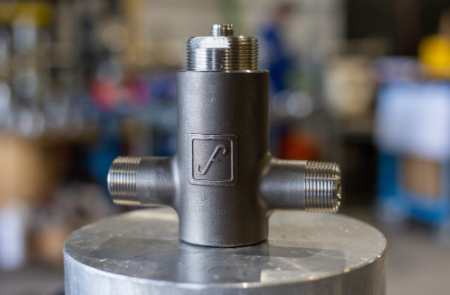
Accurate flow measurement is essential in many industrial systems because it helps operators understand how liquids and gases move through a process. Whether the application involves water, chemicals, oils, fuels, compressed air, or food-grade fluids, flow data plays a direct role in process control, efficiency, equipment protection, and product quality. In many facilities, it is one of the most important measurements used to keep systems running reliably.
One of the main reasons Flow meters are used for monitoring process performance is that flow affects nearly every stage of production and transfer. In water and wastewater systems, flow measurement helps verify treatment rates and pump output. In chemical applications, it supports dosing, batching, and transfer accuracy. In lubrication systems, it confirms that equipment is receiving the correct amount of fluid. In each of these situations, accurate flow measurement helps improve consistency and reduce unnecessary waste.
Flow meters are also widely used for equipment protection. Pumps, filters, heat exchangers, and compressors all depend on correct flow conditions to operate properly. If flow drops too low or becomes unstable, equipment performance can suffer and maintenance issues can follow. Monitoring flow allows operators to identify problems early, reduce downtime, and improve the overall reliability of the process.
Another important use is utility and energy management. Flow data can help facilities track water, gas, steam, or compressed air consumption and identify areas where efficiency can be improved. This makes flow measurement valuable not only for process control, but also for cost management and resource planning.
In manufacturing, flow meters also support quality control. If the amount of liquid or gas moving through a system changes unexpectedly, it can affect mixing, dosing, cooling, heating, or filling performance. Reliable measurement helps operators keep those variables within the desired range and maintain more consistent output.
Because different applications have different requirements, the best flow meter depends on the fluid, pressure, temperature, viscosity, pipe size, and accuracy needed. Some systems require precise dosing, while others focus more on monitoring or long-term trend data. That is why understanding the application is always a key part of choosing the right meter.
For engineers, buyers, and operators evaluating process instrumentation, flow measurement is important because it improves visibility, supports control, and helps protect both equipment and product quality. From utilities to production lines, flow meters continue to play a central role in modern industrial systems.