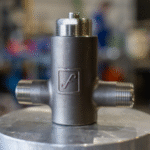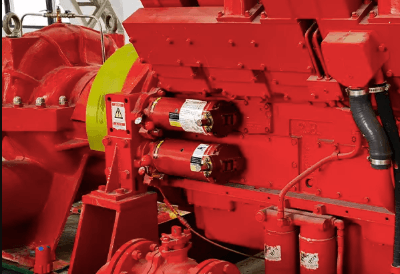
The W-series spring starter motor represents the intersection of advanced engineering and real-world industrial demands—a product developed through deep understanding of what marine and heavy industrial applications require from engine starting technology. Its development history reflects systematic responses to field challenges encountered in the most demanding environments on Earth.
Marine Applications: The Ultimate Reliability Test
Marine applications represent perhaps the ultimate test of starting system reliability. The marine environment combines corrosive saltwater exposure, constant vibration and motion, limited maintenance access, and the severe consequences of engine starting failure at sea. A vessel that cannot start its main propulsion engine in an emergency has potentially lost steerage in hazardous conditions—an outcome that must be prevented at any engineering cost.
The W-series spring starter motor is engineered to meet these marine reliability requirements without compromise. Marine-certified versions incorporate materials and surface treatments specifically selected for saltwater resistance, sealing systems designed to prevent moisture ingress even in spray environments, and vibration isolation features that protect the spring mechanism from fatigue induced by shipboard vibration.
Heavy Industrial Applications
Power Plant Starting Systems
Large diesel and dual-fuel generators in power plants require starting systems that function reliably when the grid has failed—precisely the condition in which the generator is needed. The W-series spring starter provides this capability by storing energy completely independently of the electrical grid. When grid power is lost, the W-series spring retains its charge and can start the generator without any electrical input.
Refinery and Chemical Plant Applications
Refineries and chemical processing plants present challenging combinations of requirements: explosive atmosphere compliance, chemical resistance, high starting reliability, and integration with complex safety and control systems. The W-series addresses these requirements through certified designs, corrosion-resistant materials, and integration-ready interfaces.
Mining Industry Applications
Underground mining requires starting equipment that meets stringent safety requirements for explosive atmosphere classification, while surface mining demands durability in harsh dusty, vibration-intensive environments. The W-series is available in configurations appropriate for both underground and surface mining applications.
W-Series Engineering Differentiators
Several engineering features differentiate the W-series from alternative starting solutions:
- Higher energy density: stores more energy per unit weight than previous generation designs
- Enhanced sealing: exceeds basic IP65 requirements with options to IP67 and above
- Marine-grade materials: stainless steel and specialized alloys for saltwater applications
- Modular design: allows service with readily available components rather than complete replacement
- Integration interfaces: built-in provisions for sensors and actuators
See also: How to Plan a Smooth Bus Journey to TBS
The Development Process Behind the W-Series
The W-series design reflects a systematic development process that began with detailed analysis of failure modes in previous generation products and competitive alternatives. This failure mode analysis identified the specific engineering improvements needed to achieve the reliability level required by the most demanding applications. Each identified improvement was implemented and validated through both bench testing and field trials before the design was finalized.
Ongoing field feedback continues to inform product improvement. Engineering teams at the manufacturer analyze field service reports, customer feedback, and warranty claims to identify opportunities for further improvement. This continuous improvement cycle ensures that the W-series remains a leading solution as application requirements evolve.
Global Installation Examples
W-series spring starter motors are installed globally in some of the most demanding applications. Arctic offshore platforms rely on them for emergency compression system starting. Tropical power plants use them for backup generator systems. Marine vessels from the North Sea to the South Pacific depend on them for propulsion engine starting. This global installation base demonstrates the W-series’ ability to perform across the full spectrum of industrial environments.
Frequently Asked Questions
How does the W-series handle extreme humidity environments?
Marine-grade W-series units are specifically tested for high-humidity environments, including salt fog exposure per international standards. The enhanced sealing and corrosion-resistant materials used in marine versions provide reliable protection in even the most humid marine and tropical environments.
What classification society approvals does the W-series carry?
The W-series has received type approvals from major marine classification societies including Lloyd’s Register, Bureau Veritas, DNV GL, and others. The specific approvals held by a particular unit should be verified against the requirements of the vessel or installation.
Can W-series units be overhauled at sea or in the field?
Major overhaul of W-series units is best performed in a workshop environment with appropriate tools and lifting equipment. Field maintenance is limited to inspection, lubrication, and minor adjustments. For shipboard applications, plan major overhauls during drydock periods.
Conclusion
The W-series spring starter motor stands as the definitive solution for marine and heavy industrial engine starting applications. Its engineering excellence, environmental resistance, and proven performance in the world’s most demanding installations make it the preferred choice for operators who accept no compromise on starting reliability. The investment in W-series technology delivers dependability that protects operations, assets, and personnel throughout the equipment’s long service life.